

Money Saving 301
What Should Be in an Emergency Fund
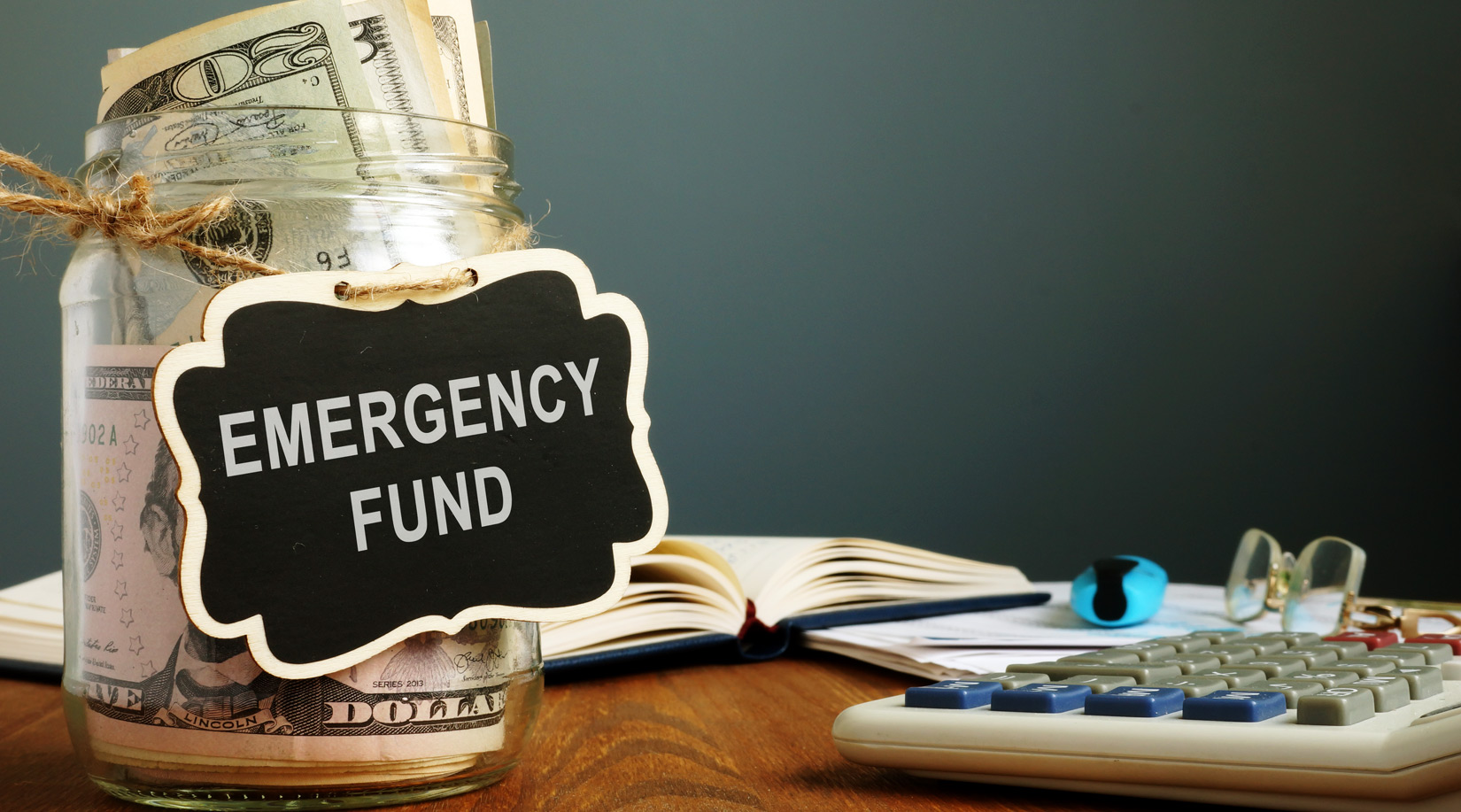
Life is full of surprises. Some can be good, some bad. It’s good to be as prepared as possible for the unexpected. This is where Emergency funds can help. An Emergency fund is money that has been saved for – you guessed it – emergencies. Many people in the U.S. do not have any money set aside – according to US News, “Two in five Americans (42%) don't have an emergency savings fund.” When an emergency does happen, these people are unfortunately not prepared and may be forced to tap into their savings. Bad things will often stack on top of each other. Job security isn’t guaranteed. Bills need to be paid whether someone has a job or not. This article will teach you about the importance of having an emergency fund, when and when not to use it, and how much you should have saved.
GETTING STARTED
A popular, and very true mantra in the world of personal finance is, “Not having an emergency fund is an emergency.”
Here are some ways to start building your emergency fund:
- Take a small amount of money from each paycheck and put it in a separate bank account.
- Cut back on unnecessary spending until your emergency fund is set up properly.
- If there are things you own that are no longer useful to you, try selling them. For example, Facebook Marketplace can be a great way to quickly offload certain items you don’t want anymore.
- If you receive a bonus or a tax refund, you could use those funds to start your emergency fund.
- Think about starting a temporary (or permanent) side hustle until your emergency fund is fully funded.
When building your emergency fund, think about your monthly expenses.
- How much is your rent?
- How much do you spend on food per month?
- What about your utilities?
- Do you have any monthly debt payments that you need to make?
If an emergency does happen – let's say you lose your job – you will still have to pay for these things. These are called fixed costs. This is a lot to consider; creating a budget could help. If you don’t want to build a budget, having an approximate idea for what your monthly expenses are is a good place to start.
THINGS TO AVOID WHEN USING EMERGENCY FUNDS
As far as mistakes with emergency funds go… there are plenty. For starters, you should not have anything saved aside for “wants.” An emergency fund should only cover things that are essential “needs.” Money in your emergency fund should be allocated for things like rent, food, insurance, and things for children or pets. Just about everything else is not considered an emergency. With that in mind, when using the funds, it should only be for a true emergency.
Many people see money saved as a means to buy something nice for themselves or go on a trip. This is not what an emergency fund is for. You are putting yourself at risk if an emergency does happen. This is not an investment account either. Others see their 401(k) as an emergency fund, and they withdraw from it early. Try not to withdraw from 401(k) or investment accounts for emergencies unless absolutely necessary.
There are many misconceptions people have about using an emergency fund. Some people believe that they don’t need an emergency fund because they can put any expenses on a credit card. Using credit cards can often come with additional fees and can easily result in financial setbacks. Others believe that investments replace the need for an emergency fund. For some, the idea of having thousands of dollars in an account is enticing. Why not use that money in the stock market? There are two main answers. First, if something urgent comes up, it often takes time to sell stocks to get your money. Secondly, the stock market has its ups and downs. If it’s down when you need money, that could be a problem. The goal for your emergency fund is to know exactly where the funds are and be able to access them right away.
HOW MUCH MONEY SHOULD BE IN YOUR EMERGENCY FUND?
When thinking about how much money you should set aside in your emergency fund, the general rule of thumb is 3-6 months of your household income. This is not one size fits all though, and different types of employment demand different emergency funds. For example, if your job is volatile – something like contract work or freelance – you may want to have a larger emergency fund. There is a higher chance for longer periods of time with less money coming in or no money at all – so it may be necessary to save more money for emergencies. Think about if an injury happened and you couldn’t work, or if you lost your job. Three to six months is often an adequate amount of time to find the next opportunity.
If you already have a small emergency fund, that’s great! But there’s no shame in only having a little set aside, or if you're just getting started. Having an emergency fund can also have a positive impact on your mental health and provide much needed stress relief. It can allow you to pursue other financial goals because you know if something doesn’t work out, you have a safety net. Hopefully after reading this, you realize the importance of these funds, and why you should start an emergency fund, or add more to it.
Ready to learn more financial tips and tricks like this? Visit our blog Finance Academy!
Sources:
US News – Survey: 42% of Americans Don't Have an Emergency Fund | Banking Advice | U.S. News
https://www.usnews.com/banking/articles/2025-financial-wellness-survey?utm_source=chatgpt.com
Facebook Marketplace
https://www.nerdwallet.com/article/finance/sell-on-facebook-marketplace
Withdrawing from 401(k)
Should You Take a Withdrawal or a Loan From Your 401(k)?
What is an emergency fund?
https://www.checkngo.com/finance-academy/article/what-is-an-emergency-fund


Editorial Policy: The information contained in Check `n Go’s Finance Academy Learning Center is for educational purposes only and is not legal advice. You should consult your own attorney or seek specific advice from a legal professional regarding any legal issues. Check `n Go does not act as a credit counseling, repair service, or debt consolidation service in providing this content. Please understand that Check `n Go policies change over time. Blog posts reflect Check `n Go policy at the time of writing. While maintained for your information, archived posts may not reflect current Check `n Go policy.
The information contained in our blog posts are the author’s own opinions, not those of Check `n Go or any other company. Any pros and cons are developed by our editorial team based on independent research. Some of the products, services, and offers on this page may not be available from Check `n Go. In Texas only: Check `n Go does not act as a credit services organization in providing this content.

Loans Rates and Terms by State
Select your state below to view important rates, terms, and disclosures unique to the state.


Online Disclosures
Customer Notice: Payday Loans are typically for two- to four-week terms. Some borrowers, however, use Payday Loans for several months, which can be expensive. Payday Loans (also referred to as Payday Advances, Cash Advances, Deferred Deposit Transactions/Loans) and high-interest loans should be used for short-term financial needs only and not as a long-term financial solution. Customers with credit difficulties should seek credit counseling before entering into any loan transaction. See State Center for specific information and requirements.
California operations licensed by the California Department of Financial Protection and Innovation pursuant to the California Deferred Deposit Transaction Law. Texas loans originated by a third-party lender, restrictions apply. Eastern Specialty Finance, Inc., D/B/A Check ‘n Go is licensed by the Delaware State Bank Commissioner pursuant to 5 Del. C. sec. 2201 et. al.
Check `n Go Online is not a direct lender in Texas, where instead it acts in the capacity as a Credit Services Organization in conjunction with third-party lenders.
*Active checking account open for at least 30 days.
*Approval depends upon meeting legal, regulatory and underwriting requirements. If approved and originated by 8:00 pm ET on a business day, online loans are typically funded no later than the following business day. All times and dates are based on Eastern Time (ET). Check `n Go and third-party lenders may, at their discretion, verify application information by using national databases that may provide information from one or more national credit bureaus, and Check `n Go or third-party lenders may take that into consideration in the approval process.
We do not report credit in Texas.
Products or services offered to customers may vary based on customer eligibility and applicable state or federal law. All available products subject to applicable lender’s terms and conditions. Actual loan amounts vary. See State Center for specific information and requirements.
Check `n Go currently operates online in: Alabama, California, Delaware, Florida, Idaho, Indiana, Kansas, Michigan, Missouri, Oklahoma, South Carolina, Texas, Utah, and Wisconsin.
Check `n Go currently operates in store locations in: Alabama, Delaware, Idaho, Michigan, Missouri, Oklahoma, South Carolina, Texas, Utah, and Wisconsin.
The Company, individually or through its affiliates, is licensed as a Debt Collector by the California Department of Financial Protection and Innovation (DFPI), License Number 10435-99.
Notice to California consumers: Information on your privacy rights under the California Consumer Privacy Act can be found by reviewing the California Consumer Privacy Act (CCPA) Policy.